
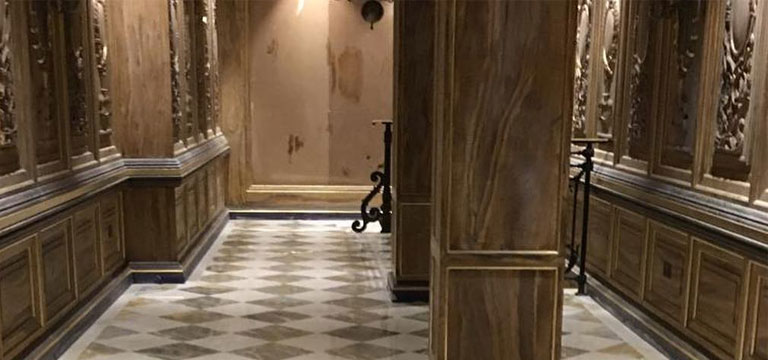
With its exceptional appearance, longevity and sustainability, wooden furniture comes with numerous benefits to your property. What’s more, unlike some of the alternatives, you can refinish, restore and repair timber pieces.
Here, we aim to give an overview of how to repair pieces like this.
Why might you need to repair wooden furniture in the first place?
There are a number of reasons why you might be looking at a repair, including:
- Dents and small scratches due to daily use, impacts and accidents
- Heat stains following contact with items like hot mugs, cookware and so on
- Water damage, which often swells the timber
- Damage to the paint (and chipping) from general use and over time
What products can I use to repair wooden furniture?
Whatever kind of damage you’re fixing, you’ll probably need at least one of the commercially available timber repair products to do the job.
These include wax and polish remover to shift old dirt and wax. A wood stripper, meanwhile, will remove paint and varnish, and a wood-stopping agent will fill in holes, gouges and cracks in your wood. To buff away superficial scratches, reach for a wood wax product.
If you’re looking to repair general superficial damage, a multi-purpose wood filler is what you need. And a wood bleacher can remove dark stains from rust, damp and alcohol. Equally, use it if you want to make dark furniture a little lighter.
Finally, a sanding sealing agent seals your timber in between sanding and waxing. And if you’re working on antique furniture, by the way, look for different advice, as that requires specialist effort.
Fixing scratches on wooden furniture
Scratching is a very common form of timber damage but, happily, it’s pretty easy to put right, particular if when issues are minor. The best solution is to use a lint-free cloth and wood treatment wax to buff the scratching out.
Another option for deeper scratches, especially on a table where there is noticeable discolouring, could be a patching stick to rectify the damage.
You’re probably better off leaving the deepest scratches and severest gouges to the professionals. The same is true if you need to replace the veneer on your furniture.
If you do fancy repairing gouges …
As mentioned, the real eyesore gouges are often an issue for the experts. But, if you’re feeling brave, have a go yourself:
- Fill in gouges or grooves with an appropriate wood filler and leave to dry out thoroughly for two or three days.
- Sand the area and brush away any dust.
- Refinish the surface with a wood polish or wax.
Fixing heat stains
Hot cuppas, pans and so on can all make their mark. Specialist heat-stain removal products are available and you can use them with a cloth which has been pre-treated with natural oils to tackle both heat and water marks.
Plus you can try treating heat stains with some common household items, including toothpaste and bicarbonate of soda. Using one part toothpaste and two parts bicarb, gently rub the mixture into the stain. Leave for 10 minutes and then wipe off with a cloth.
Another idea is to put olive oil and salt on to the mark and then wipe off with a clean cloth once it’s dry.
Lastly, regular alcohol-based sanitiser can work may work on some timber surfaces if you’re trying to shift a heat stain.
Wood repair, restoration and sanding from Royal Stone Care
At Royal Stone Care, we love looking after gorgeous timber as well as marble, limestone, quartz, granite and the like. Talk to us whether you need wood restoration, wood sanding or repair jobs.
Based in London, we work with domestic and commercial clients UK-wide. And we offer an extensive suite of services to work on flooring, staircases, furniture and more. Get a free, no-obligation quote today and we’ll take it from there.
Browse our website to learn more and get in touch today for your free quote.
