

Last Updated on October 26, 2026 by Royal Stone Care
Master craftsmen have used marble, a kind of white limestone, for centuries in historical works from the Taj Mahal to Michelangelo’s David and Moses sculptures.
Today, it remains a popular and prestigious material. Elegant and naturally beautiful, the depth of its patterning and unique markings make marble a luxurious choice in modern homes and businesses. So no wonder people use it in everything from table and countertops to flooring.
However, its soft and porous nature means it can stain easily, or be susceptible to etching. (That’s the dull, sometimes pitted and rough-feeling marks that can appear on the surface.)
Marble with a glossy finish is especially susceptible to marking. Meanwhile if you have a matte finish, this reduces these imperfections.
One decision you’ll have to make early on is whether your floor should be honed or polished – these are the two most popular marble finishes. While both yield stunning results, they also differ in terms of texture, appearance, maintenance requirements and practical considerations.
Honed marble
A finish like this has a smooth texture with a matte or satin look. You create the effect by stopping the polishing process before the stone takes on a glossy shine. The result is a natural, soft appearance that’s elegant yet understated.
This has a velvety finish and has been sanded, and although it’s not matte exactly, it’s certainly not a shiny surface either. Because it’s not as slippery as polished marble, it’s ideal for floors. It’s also less likely to show up scratches or etching than its shiny counterpart.
In particular, this finish is a popular choice for busy parts of your home like bathrooms, where there are practical as well as aesthetic considerations, including slip resistance, to think about.
And it’s ideal for creating a modern, laid-back and natural interior design.
What are the benefits of a honed finish?
There are a number of these, including a smooth texture with a low sheen. Plus you get greater resistance than with the polished equivalent. Additionally, a honed finish can conceal etching, scratches and the effects of everyday wear and tear.
Is there anything else to take into account?
Just bear in mind that honed marble is slightly more porous than its polished equivalent, so you’ll need to seal your stone. At the same time, if you prefer a nice reflective shine, honed probably isn’t the right finish for you.
Polished marble
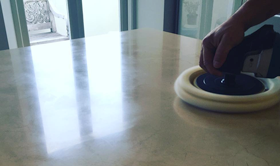
A polished finish is a reflective, shiny surface which brings out the stone’s natural veining and colour. Diamond abrasives refine the surface until it’s so smooth it reflects light.
More common in kitchens in countertops and the like, this kind of marble is less porous than honed marble. So it should not stain as readily, and you can typically seal it less often. Additionally, many like its attractive shine, which can help a smaller kitchen look bigger than it is.
Where you want a luxury look in a feature area such as a hallway or with a worktop, polished marble is the way to go.
Are there any other advantages or possible downsides?
A polished appearance enhances the stone’s natural colour and look. So the final effect is very high-end. The shine can also make darker spaces look brighter. Equally, with a proper sealant, polished marble is easy to wipe clean.
Other considerations are that polished marble shows up marking and staining more than honed surfaces do, while this finish can also be slippery when wet.
Should a marble floor be honed or polished?
Honed marble is great for busy households, with a soft and natural modern look plus excellent slip resistance. The finish also hides wear and tear, marks and etching, making it a highly practical choice.
For its part, glossy marble has a high-end look with strong veining, and it makes a bold statement. Plus it’s easy to wipe clean.
It is possible to change a honed marble surface into a polished one, and vice versa. But that’s a job for professionals with the right specialist equipment; specifically a stone-polishing machine.
What can you do yourself?
Depending on what kind of marble you have, you can decide what to do to keep it looking its very best. You may choose to do the simpler tasks such as basic routine cleaning yourself.
Essentially, however, marble care is generally best left to professionals. They have the right expertise and experience, especially for bigger projects like marble restoration or complex repair jobs.
Talk to us
Talk to us at Royal Stone Care before you do anything else. We help with all aspects of marble care in London and around, from cleaning and polishing to complete marble restoration. Give us a call to discuss your needs today.
