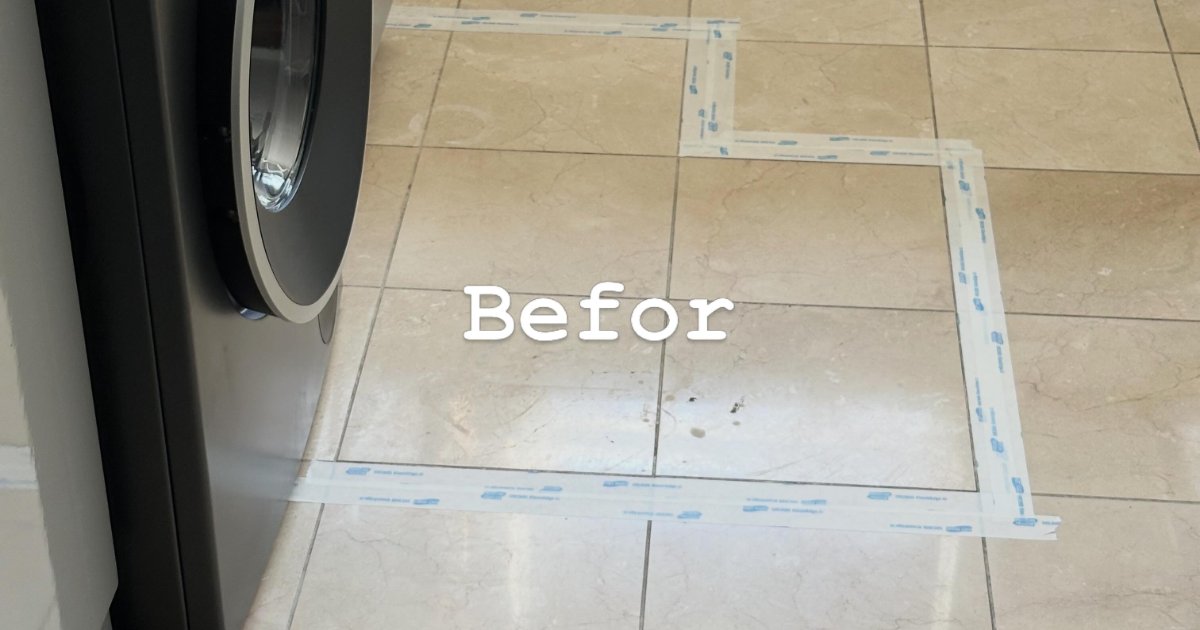
It may look amazing, but travertine is also a porous natural stone. So its grout lines are far more vulnerable to staining than those of denser materials such as granite. What’s more, this isn’t just a cosmetic issue – it indicates contamination deep in the pores of the grouting.
Why does grout on travertine become black?
When you mop or wipe travertine tiles, the cleaning solution frequently leaves a thin, filmy residue in its wake. Over time, this soapy waste product builds up inside the porous grout lines. This means that, rather than a spotless surface, you get a sticky area which traps grease, grime and so on. Therefore, your grout looks darker than it should, even with regular cleaning.
What’s more, the blackened grout lines keep coming back. And because the grout is porous, once the residue is there, mildew spores can also cling to it. At first, you may just notice a mild dullness. But the process accelerates until eventually you have an issue that significantly undermines the look of your natural stone.
Why standard cleaning won’t work
You may be tempted simply to scrub more vigorously, or to use more astringent cleaning products. But, unfortunately, this just makes matters worse. Harsh chemicals etch travertine, in the same way they do all natural stone. Meanwhile, constant surface scrubbing still won’t shift the contamination deep within the grout.
So without specialist grout cleaning and sealing, the blackening will just come back.
Where will you most frequently see this discolouring?
- Bathrooms, wetrooms and shower rooms: The prolonged humidity, warm temperatures and constant moisture exposure create the perfect environment in which mildew spores can thrive. At the same time, there may also be limited ventilation.
- Kitchens and living rooms: In these areas, with less humidity and faster drying times, problems are typically less pronounced. However, staining can still occur and soapy residue can still darken grout.
- Hallways and dining rooms: These aren’t usually among the wetter areas of the home, so there is less microbial activity in these areas. Plus any possible blackening tends to be cosmetic rather than anything else.
In short, the real cause behind travertine grout blackening is soapy residue attracting grime. In damp rooms where there is moisture retention, mildew is a more significant factor.
Potential problems with DIY travertine floor care
You may be tempted to reach for cleaning products which are too strong for the task in hand when trying to deal with blackened grout lines. But harsh chemicals, unfortunately, simply serve to make things worse. They may seem to offer a quick fix but, in truth, can ultimately damage the natural stone surface irreversibly.
Another possible problem is to go for steam cleaning, which can, again, be harmful and actively accelerate staining and stimulate mildew growth.
DIY sealants from hardware stores don’t often bond with natural stone grout, and so may leave a sticky residue that can make it look worse than previously.
Professional deep cleaning teams have the specialist equipment to remove contamination from inside grout pores. The grout returns to its original, lighter colour, visibly refreshing your surface and lending it a more elegant appearance. Every technique and tool is designed for maximum safety and protection of your stone.
Equally, using a specialist service is important if your property is high-end, to protect its value. The best operator will work with minimal disruption, provide guarantees and communicate clearly to give you full peace of mind.
Seal the deal
The next step the pros will take is to add a high-quality grout sealer to form a protective barrier and penetrate the pores. This keeps off oils, residues and liquids, so that they don’t sink in and blacken your grout lines again. Every day cleaning also becomes easier and more effective. (Use stone-safe cleaning products as well and clean gently and often.)
Ideally, reseal every two to four years. And this shouldn’t alter the natural colour, since sealants are designed to be invisible.
Contact Royal Stone Care
Royal Stone Care are the London-based travertine specialists operating across the UK. Talk to us about travertine cleaning, repair and restoration, as well as travertine sealing. With full public liability insurance, our expert craftsmen provide a prompt, effective service every time.
Get in touch today for a free quote, without obligation.
